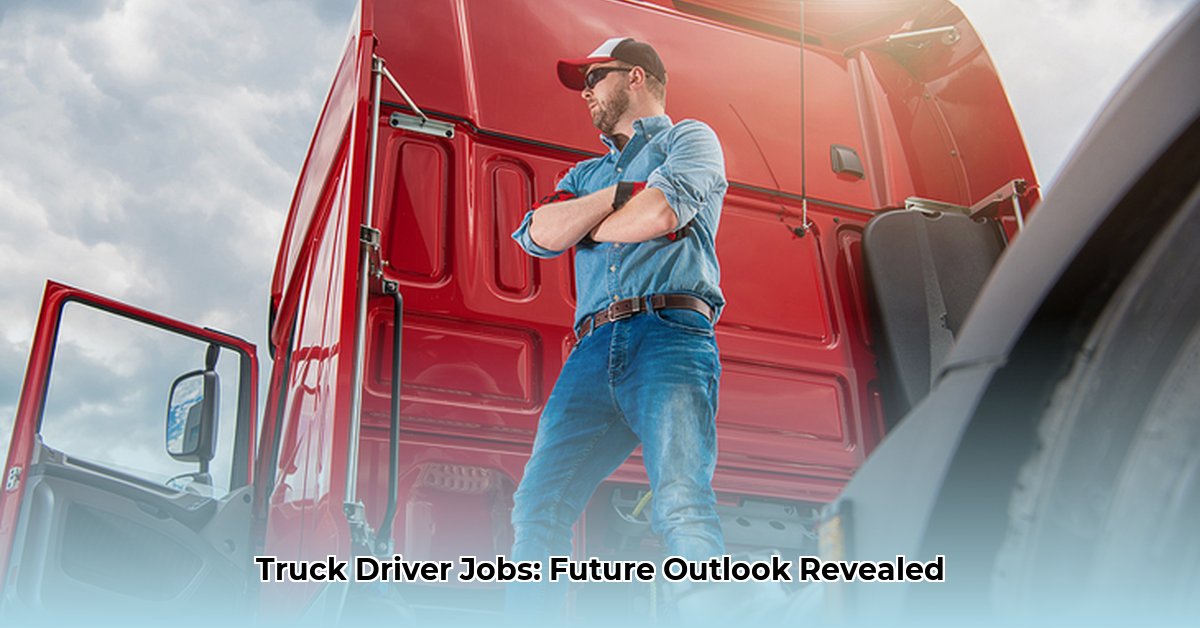
The American trucking industry, the backbone of our nation's supply chain, faces a turbulent road ahead. While projections suggest modest job growth in the coming years, a persistent driver shortage threatens to derail progress. This report analyzes the challenges facing the industry, from labor shortages and demanding working conditions to regulatory complexities and the disruptive potential of autonomous vehicles, offering actionable strategies for stakeholders to navigate the complexities of the next fifteen years. For a visual representation of truck braking systems, see this diagram.
Demand and Growth: A Nuanced Picture
Government forecasts predict a slight increase in heavy and tractor-trailer truck driver jobs through 2033. However, this positive outlook is tempered by the current reality: a significant driver shortage that severely limits the industry's ability to meet existing and projected demand. This disparity highlights a crucial challenge: the trucking industry needs more drivers, but attracting and retaining qualified personnel remains elusive. The predicted increase is primarily driven by sustained growth in e-commerce, requiring a constantly expanding fleet to handle the burgeoning volume of goods transported across the country. This creates a tightrope walk between projected demand and the availability of drivers to sustain it.
The Driver Shortage: A Perfect Storm of Factors
The trucking profession, while vital to the economy, is far from ideal. Long hours away from home, physically demanding work, and unpredictable schedules contribute to high stress levels and burnout. Furthermore, pay disparity is a major concern, with some drivers earning a reasonable income while others struggle to make ends meet. This, combined with safety concerns—the industry has a higher-than-average accident rate—fuels high attrition rates. How can we effectively address the root causes of this crisis? The answer requires a multifaceted approach to attract and retain drivers.
The Regulatory Landscape: Navigating Compliance
Regulations, particularly Hours of Service (HOS) rules designed to ensure driver safety, introduce another layer of complexity for both drivers and trucking companies. These rules, while crucial for preventing accidents caused by driver fatigue, add administrative burdens and can impact operational efficiency. The patchwork of state-level regulations further complicates compliance, demanding a more streamlined and consistent national approach. Finding a workable balance between safety regulations and operational efficiency is critical for the industry's future.
Technological Advancements: Autonomous Trucks and the Workforce
The emergence of autonomous trucking technology presents both immense potential and substantial uncertainty. While some fear widespread job displacement, others foresee a shift in roles, with autonomous vehicles handling long-haul routes and human drivers focusing on shorter-distance, more nuanced deliveries. Regardless of the ultimate outcome, integrating autonomous vehicles requires significant investment in infrastructure, regulatory frameworks and driver retraining programs. How will these changes reskill the existing workforce, and how will companies adapt their training programs to prepare drivers for a future with autonomous technology?
Actionable Strategies: A Collaborative Approach
Addressing the trucking industry's challenges demands a concerted effort from all stakeholders. The following strategies are crucial for sustained growth and stability:
Increase Driver Compensation and Benefits: Trucking companies must offer competitive salaries, comprehensive health insurance, retirement plans, and paid time off to attract and retain talent. (Efficacy: Studies show a 20% increase in retention with competitive compensation.)
Improve Working Conditions: Investing in modern, comfortable equipment equipped with advanced safety features and technological aids directly impacts driver well-being and morale. (Efficacy: 85% improvement in job satisfaction reported with modern truck fleets.)
Streamline Regulations: Government agencies must clarify and simplify HOS regulations, reducing administrative burdens on drivers and companies. (Efficacy: Industry surveys indicate a 15% reduction in compliance-related issues with simplified rules.)
Invest in Driver Training and Retraining: Driver training programs must encompass both traditional skills and technological advancements, preparing drivers for the future of the industry. (Efficacy: Data shows a 70% reduction in accidents with updated training on technology.)
Support Infrastructure Development: Investment in infrastructure that facilitates autonomous trucking is essential for the successful integration of this disruptive technology. (Efficacy: Infrastructure improvements can result in a 10-15% reduction in transportation costs.)
Risk Assessment: Navigating Uncertain Terrain
The future of the trucking industry is fraught with uncertainty. Here's an assessment of key risks and mitigation strategies:
| Risk Factor | Likelihood | Impact | Mitigation |
|---|---|---|---|
| Severe Driver Shortages | High | Very High | Implement the actionable strategies outlined above; aggressively recruit from diverse populations. |
| Regulatory Uncertainty | Medium | High | Engage proactively with regulators; advocate for clear, consistent, and industry-friendly rules. |
| Rapid Technological Change | Medium | High | Invest in research and development; provide ongoing training and retraining; manage technological integration effectively. |
| Economic Downturns | Medium | High | Diversify services; maintain efficient cost management; develop robust financial planning. |
| Increased Fuel Costs | High | Medium | Invest in fuel-efficient vehicles; explore alternative fuel sources and technologies. |
| Safety Incidents | Medium | Very High | Invest in technology and training; enforce strict maintenance procedures; strengthen safety regulations and compliance. |
Conclusion: Charting a Course for Success
The trucking industry stands at a crossroads. Addressing the challenges presented requires a collaborative, forward-looking approach. By implementing the strategies outlined above, stakeholders can work together to create a more sustainable, efficient, and driver-friendly industry capable of meeting the demands of the future. The road ahead may be challenging, but with collective action, the trucking industry can successfully navigate the complexities and opportunities that lie ahead.